Conwy Castle and a Warm Welsh Welcome in Caernarfon
From England into Wales
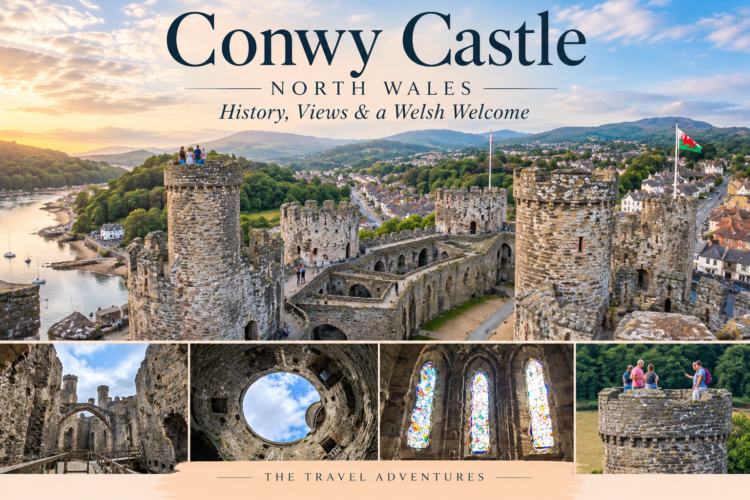
After another early morning, we packed up and drove from England into North Wales for a day filled with medieval history, beginning with a guided tour of Conwy Castle, one of the great fortresses built by King Edward I during his conquest of Wales. From Conwy, our journey would continue deeper into North Wales to Caernarfon, where we would spend the night directly across from another of Edward I’s impressive medieval castles. It was the perfect start to our first full day exploring the castles, history, and beautiful landscapes of Wales.
Visiting Conwy Castle: Quick Guide
Location: Conwy, North Wales
Built: 1283–1287
Built by: King Edward I
Originally built as: A defensive fortress during Edward I’s conquest of Wales
What to see: Medieval towers, castle ramparts, Great Hall ruins, defensive gateways, and spectacular views over Conwy and the surrounding countryside
Allow: About 1½–2 hours to explore the castle
Don’t miss: Climbing the towers and ramparts for panoramic views over the walled town, Conwy Estuary, and North Wales
Good to know: Exploring the castle involves uneven stone surfaces, narrow staircases, and plenty of steps, especially if you plan to climb the towers.
Our favorite part: Walking along the medieval walls and climbing the castle towers. The views alone make Conwy Castle worth the visit.
Walking the Medieval City Walls
Our guide, James, began the Conwy Castle tour in a unique way—not at the castle gates, but atop the medieval town walls. Walking along the ancient ramparts provided a wonderful perspective of the fortified town before leading us directly to Conwy Castle itself.
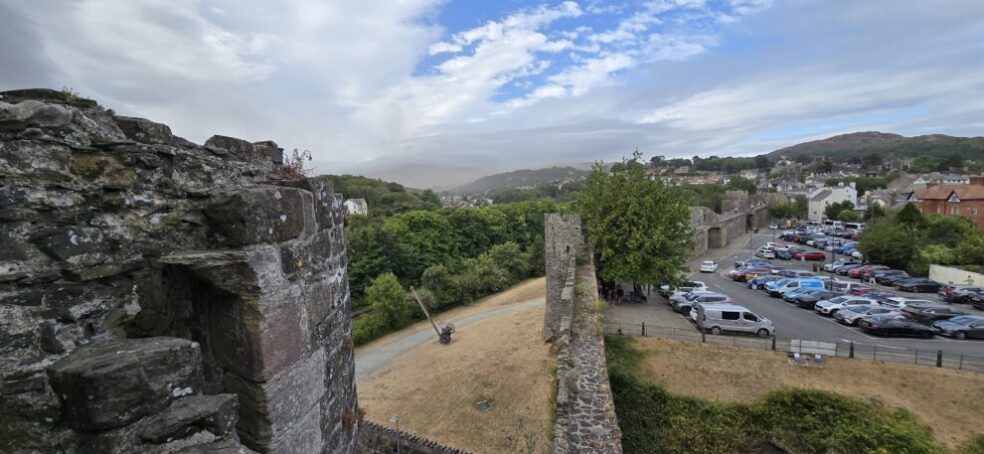
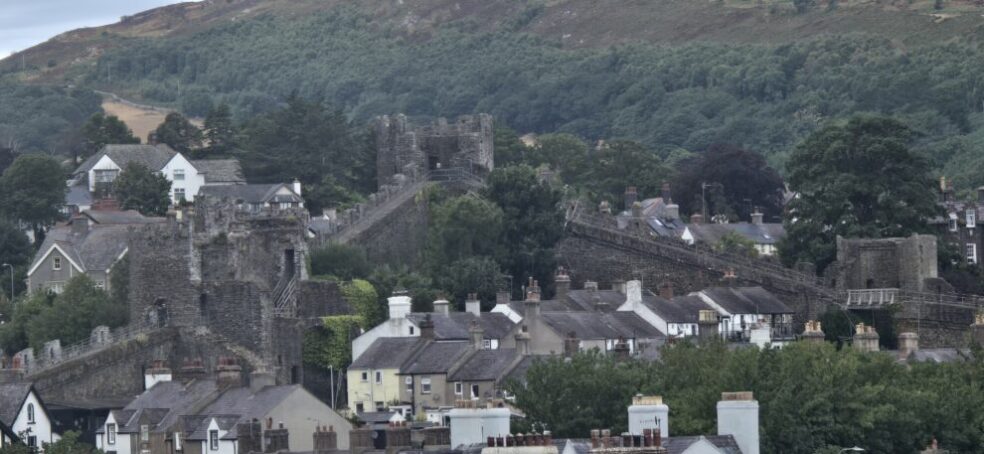
James explained that Conwy Castle was one of the first castles built by King Edward I during his conquest of Wales in the late 13th century. The fortress was designed not only to defend the region but also to protect the English settlers living inside the newly constructed walled town from the Welsh population, many of whom strongly opposed English rule.
It was fascinating to hear how every wall, tower, and gateway served a military purpose during a turbulent period in Welsh history.
Exploring the Fortress
Entering through what was once the main gate, James pointed out the location of the drawbridge and described the deadly “killing zone” where attackers could be trapped and attacked from above if they breached the entrance.
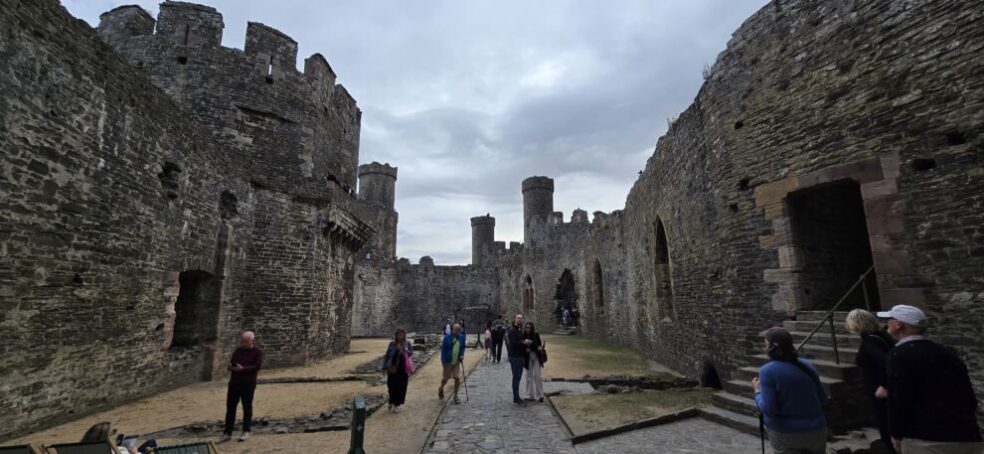
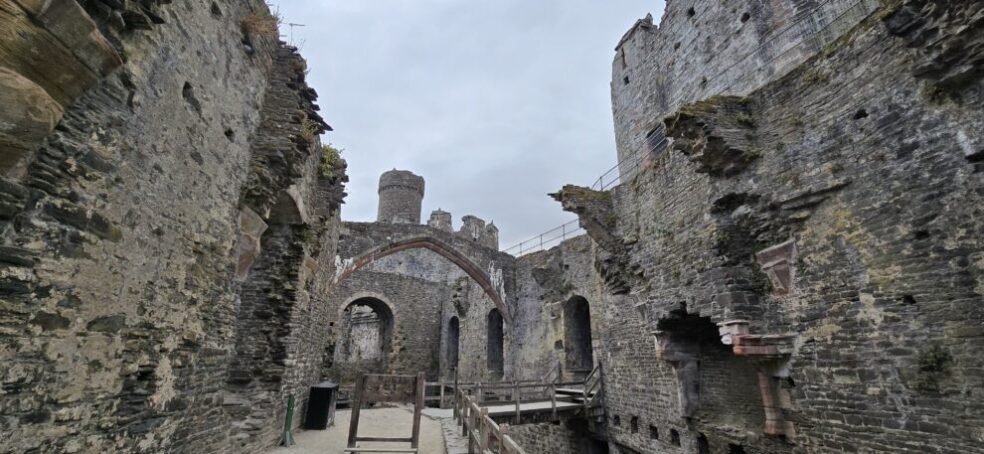
From there we entered the castle courtyard and the remains of the Great Hall, imagining what life must have been like when nobles, soldiers, and servants filled these now-empty stone rooms.
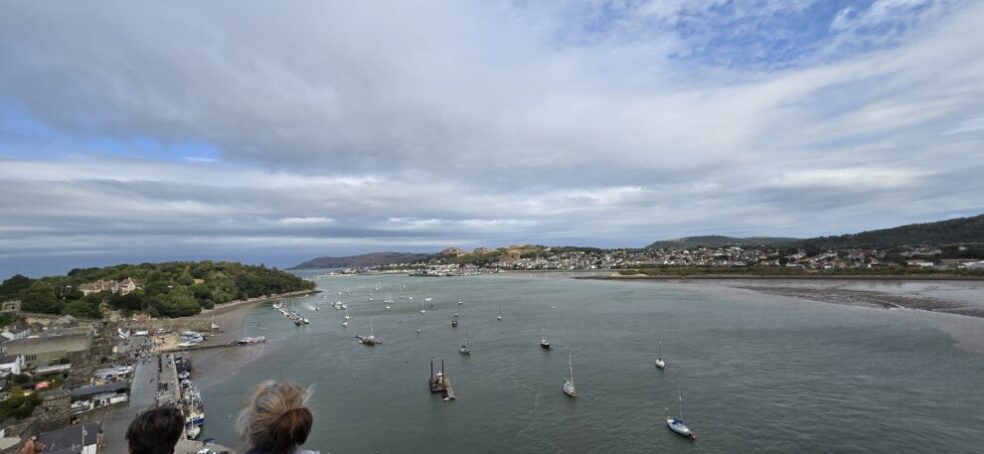
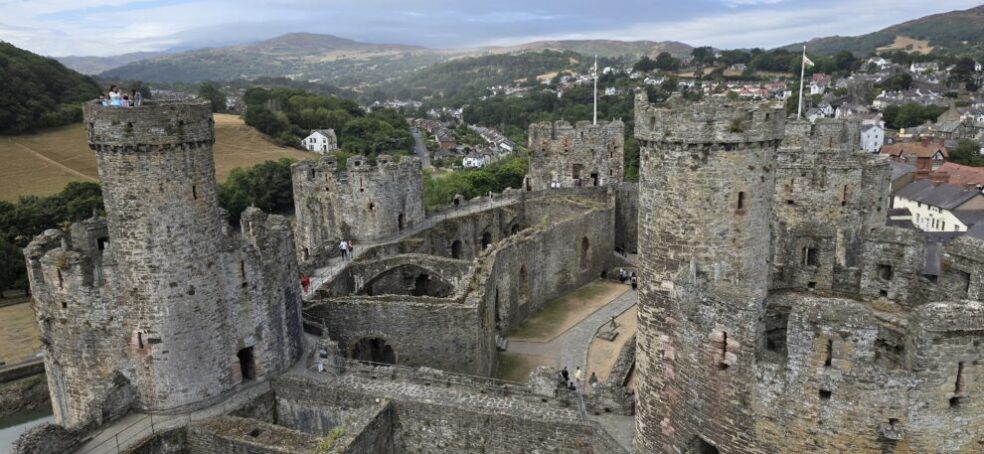
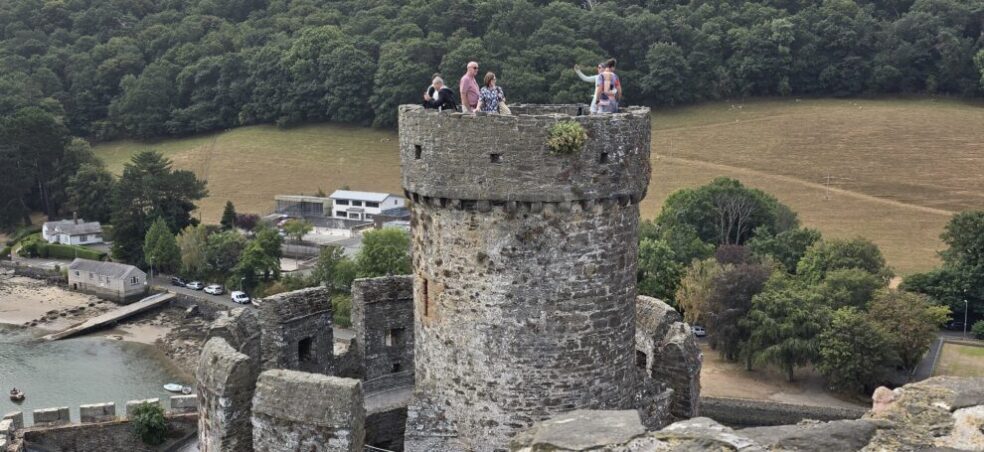
The highlight of the tour was climbing the castle ramparts and winding our way through several of the towers. From the top, we enjoyed spectacular panoramic views across the medieval town, the Conwy Estuary, the Irish Sea, and the rolling Welsh countryside beyond.
It is easy to understand why this location was chosen. The views allowed defenders to spot approaching enemies from miles away while today they provide visitors with some of the most beautiful scenery in North Wales.
Once the guided portion ended, we were free to continue exploring on our own. One of the final stops was the Prison Tower, where we learned about the grim conditions prisoners endured. Deep below was the pit where captives were lowered into darkness and often left to die from exposure, starvation, or neglect—a sobering reminder of how brutal medieval justice could be.
 Conwy Castle courtyard
- The Great hall
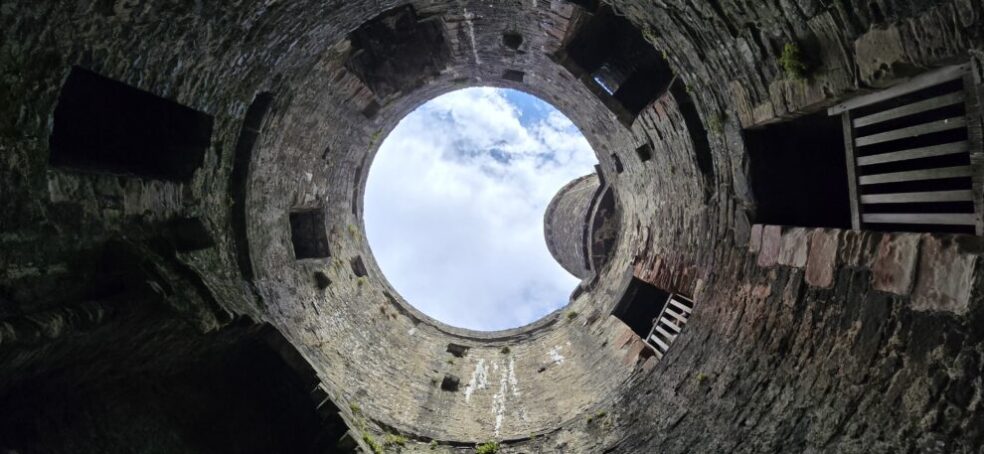
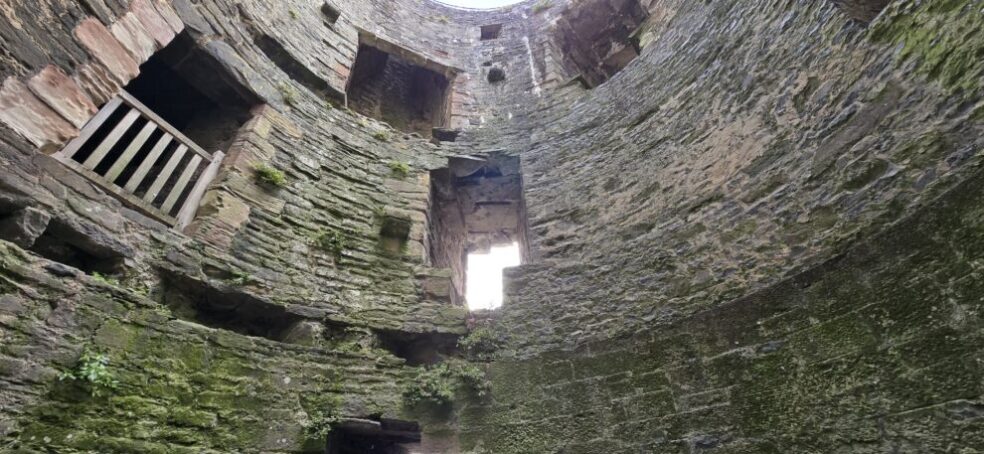
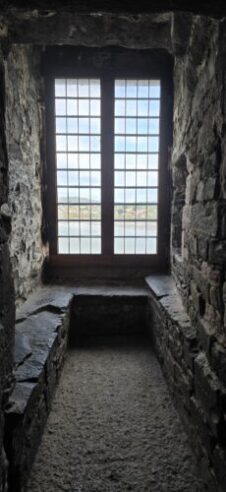
- A view from inside a tower
- A view from inside a tower
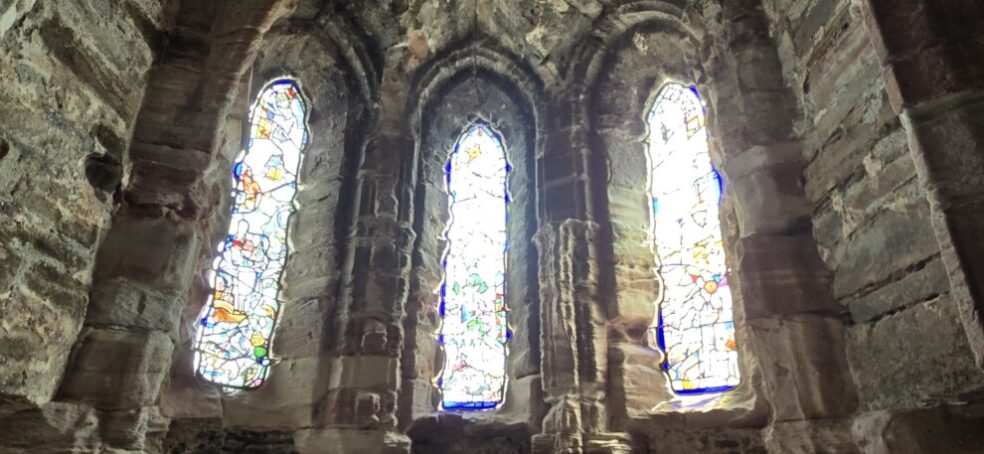
- Conwy Castle chapel
- A view of the Irish sea
- The Irish Sea from the top of Conwy Castle
- The ruins of Conwy Castle viewed from a tower
- A Conwy Castle tower
Settling into Caernarfon
After leaving Conwy, we drove to our home for the next few nights in Caernarfon. Our rental apartment was a cozy two-bedroom flat located above a row of shops and, incredibly, directly across the street from the entrance to Caernarfon Castle. We couldn’t have asked for a better location.
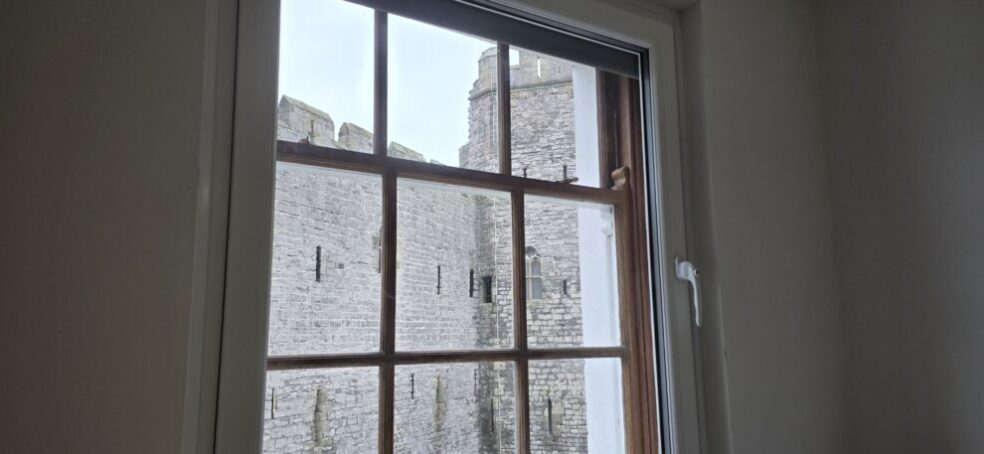
After settling in and enjoying a short rest, we headed out to explore the charming streets of this historic Welsh town.
Dinner at The Black Boy Inn
For dinner we chose The Black Boy Inn, one of Caernarfon’s oldest and most historic pubs.
The atmosphere was unlike any restaurant we had visited on the trip. The walls were beautifully painted with scenes from famous fairy tales and Welsh legends, while slate plaques explained the stories, their folklore, and the possible historical origins behind them.
Our server introduced himself as Merlin—a fitting name for someone who looked as though he might actually live in the nearby forests. Whether it was his real name or simply part of the inn’s character, it certainly added to the experience.
The hearty Welsh meal, the centuries-old building, and the storytelling atmosphere made for a memorable evening.
- The Black Boy Inn restaurant in Caernarfon
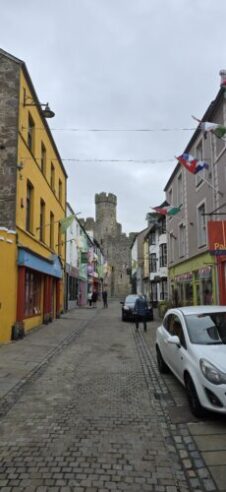
- Caernarfon, a historic Welsh town
- Inside The Black Boy Inn with the beautifully painted scenes from famous Welsh fairy tales


Finally Catching Up on Sleep
After dinner, we wandered back through the quiet streets to our apartment overlooking Caernarfon Castle.
After several early mornings, busy sightseeing days, and plenty of driving across England and Wales, it felt wonderful to finally slow down. We settled in for the night knowing another day of castles and Welsh history awaited us—but first, we were going to enjoy some much-needed sleep.
Final Reflections
Our Conwy Castle tour offered much more than simply exploring another medieval fortress. Walking the ancient town walls, learning about Edward I’s conquest of Wales, climbing the towering ramparts, and taking in the breathtaking views brought the castle’s history to life.
Combined with a relaxing evening in historic Caernarfon and dinner at one of Wales’ oldest inns, it was the perfect introduction to this remarkable corner of the country.
Conwy Castle FAQs
Conwy Castle was built by King Edward I between 1283 and 1287 as part of his campaign to establish English control over Wales. The castle and surrounding fortified town worked together as a defensive stronghold, protecting the English settlement while demonstrating Edward’s authority in North Wales. Today, Conwy Castle and its remarkably preserved town walls offer one of the best opportunities to experience the scale of Edward I’s medieval fortifications in Wales.
Yes. Conwy Castle is one of the most impressive medieval castles we visited in Wales. Between the massive towers, castle ramparts, historic ruins, and incredible views over Conwy and the surrounding countryside, there is plenty to explore. Taking a guided tour also helped us better understand the history and purpose of the fortress.
Plan on approximately 1½ to 2 hours to explore Conwy Castle. You may want longer if you take a guided tour, climb several of the towers, walk the ramparts, and spend time enjoying the views.
Yes. Visitors can explore sections of the castle ramparts and climb its towers. You can also walk significant portions of Conwy’s medieval town walls, which provide a completely different perspective of the castle and historic town.
Conwy Castle is a ruin, but much of its medieval structure remains remarkably well preserved. Its imposing towers, defensive walls, courtyards, and portions of the royal apartments and Great Hall survive, making it easy to imagine the scale of the original fortress.
Some of the best views are from the castle’s towers and upper ramparts. From there, you can look across the historic town of Conwy, the Conwy Estuary, surrounding hills, and the beautiful North Wales landscape.
Yes. Conwy and Caernarfon are close enough to easily include both towns in the same North Wales itinerary. We toured Conwy Castle before driving to Caernarfon, where we checked into our rental and spent the evening exploring the town.